
At the beginning of the 20th century, flying was still a wild dream. Flying machines would rise for a few seconds, wobble, and fall back to the ground. Then came a man with an unexpected background—an athlete, an inventor, a bit of a daredevil: Henri Farman.
In 1908, he achieved one of the first city-to-city flights in France, between Bouy and Reims. A feat that turned the Champagne region into a symbol of the conquest of the skies. But Henri Farman was more than a historic flight: he was also a visionary aircraft manufacturer, a record-breaking pilot, and a name still deeply rooted in Reims’ memory.
Modest yet ambitious beginnings
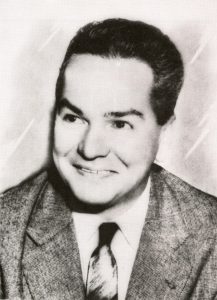
The story begins in the 1930s, when an engineer named Max Holste set up a small aircraft workshop in Reims bearing his name. After several notable prototypes and the industrial production of the MH-1521 Broussard, the company partnered with Cessna in 1960 to manufacture the American company’s light aircraft in France. The firm was ultimately renamed Reims Aviation in 1962.
A Franco-American partnership
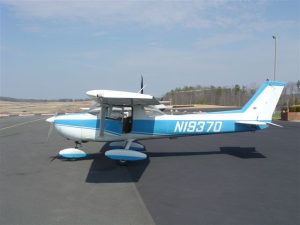
Under Cessna license, the workshops produced models adapted to the European market, such as the F150 and the FR182. The letter F, standing for France, became a symbol of quality, reliability, and elegance. These aircraft embodied French aeronautical expertise and trained thousands of pilots for more than two decades.
The golden age of Reims Aviation
The move to Prunay in 1967 marked the company’s peak, along with the rollout of its thousandth aircraft one year later, the start of twin-engine aircraft production, and diversification into subcontracting for Dassault, Airbus, and Socata.
In the workshops, Reims engineers and technicians worked with meticulous care: aviation became a way of life. The company employed several hundred people, and Reims-Prunay airfield buzzed with activity.
The Reims F406: a 100% Champagne-built aircraft
During the 1980s and 1990s, the company continued aircraft production and subcontracting work, but experienced several changes in ownership.
In 2003, Reims Aviation was split into two entities:
Reims Aerospace, specializing in subcontracting, later integrated into the Novae Group;
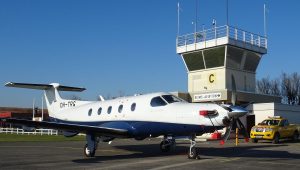
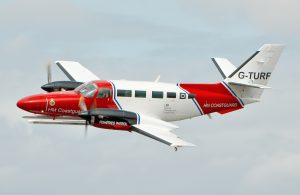
Reims Aviation Industries, dedicated to the F406 Caravan II, a pressurized twin-engine aircraft designed entirely in Reims.
Used by coast guards, mapping companies, and for business transport, the F406 represents the pinnacle of Reims’ aeronautical expertise.
A lasting legacy
Financially weakened, Reims Aviation closed in 2014, bringing to an end more than half a century of aircraft production in Prunay. Yet its presence remains visible through its hangars and the aircraft that continue to fly in aero clubs.
The company’s story echoes that of the city itself: bold, inventive, and forward-looking.